
Art Requires Interpretation. Engineering Requires Its Removal
I have loved photography since my early teens. Back then I spent way too much time in the school wet darkroom and annoyed my chemistry teachers who kindly humoured me and allowed us to make our own chemicals. Fast forward to 2026, and I am now privileged to own some remarkable cameras and lenses.. Having a range of lenses has taught me the difference between creating art, and reproducing it. I used to have a bunch of Sony cameras and lenses. They were near flawless. Sharp. Perfect. Too perfect… They reproduced a scene without adding any character of their own. Whilst every photographer is different, I found this pursuit of technical perfection soul-less which ultimately led me to be quite bored of both the process and the end result. Having owned a Leica M9 from its release in 2009, I subsequently sold it in 2013 because I was frustrated by aspects of its technical performance. Then the Sony journey began. Thankfully I didn’t sell all my M-Mount lenses as they worked well on the Sonys, yet the Sony camera experience still felt sterile.. Fast forward again to 2026, and I now own a Leica M246 Monochrom and a Leica SL2-S. The Monochrom has a black and white only sensor - It has no Bayer array on the sensor so simply can’t see colour. Ridiculous! I hear some of you saying, yet I adore it. It’s tactile, slow, manual, very analogue for a digital camera. It connects me with the process and makes me see the world in a different way, forcing me to concentrate on shape, form, light and shadow rather than colour. The SL2-S is a perfect foil to it. It has an amazing electronic viewfinder, incredible high ISO performance and handles beautifully in a way none of the Sonys ever did.
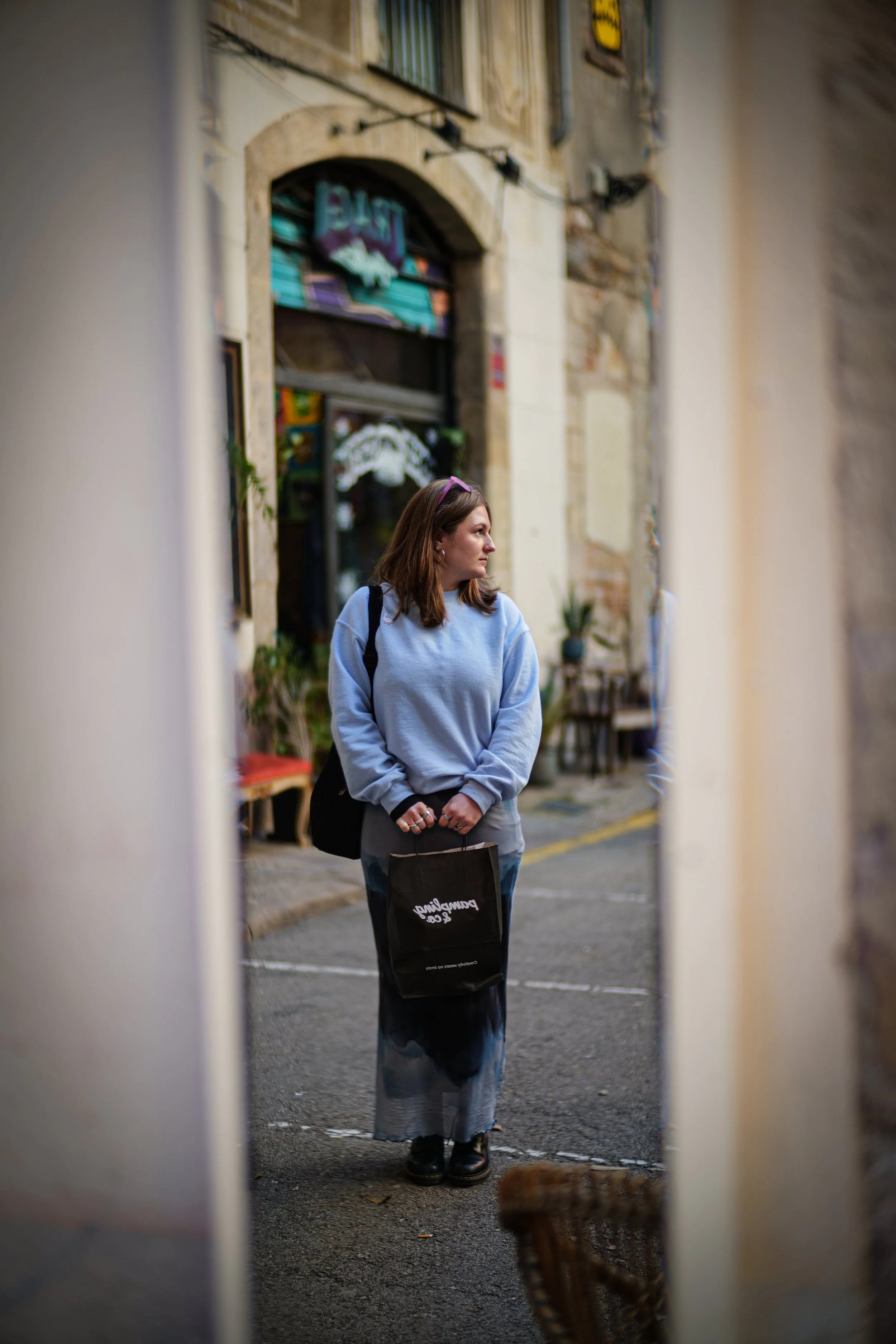
Holly in Barcelona. Shopping. As usual.
Leica SL2-S. Mr Ding 50mm f1.2 @ f1.2
One of the great things about M-Mount lenses is how easily they adapt to most other systems. Because of this, I kept four of my lenses to use on the Sonys once i’d sold the M9. I now have a 15, 21, 25, 3 x 35s, 3 x 50s, 75 and 90mm lenses. Three 35s and 3 50s I hear you ask? Well, that’s the point of this post. The three 35s and three 50s all render completely differently. Photographs taken between the three would all show the same scene, but that scene would look slightly different. Accurate? In my photography, accuracy is irrelevant. I want to create an interesting image. A capture of a fleeting moment. Something to make me smile when I see the image again in five years. Creating art has a completely different set of considerations to reproducing it.
As a cinema designer, my job is to design and build the totality of the experience for these very special rooms. Part of that is to be neutral. Accurate. Transparent. That is how the art is conveyed in a way that honours the artist’s intent and tells the story they intended. The systems I build are the clearest window onto the art. The most faithful technical reproduction of artistic intent possible within the project’s constraints. My job isn’t to interpret the story. My job is to lay the story bare and let the audience experience the full emotional rollercoaster of the story being told.
The artist introduces interpretation.
The reproducer removes it.

Catherine and Holly - 1.30AM in Barcelona
Leica SL2-S. Mr Ding 50mm f1.2 @ f1.2
That reproduction is a complex engineering exercise. It is not achieved simply by placing superb products into a room and expecting superb results. That’s like saying that great cameras and lenses ensure great photographs. They don’t. A skilled photographer can create compelling images with a phone. Just like a great cinema designer can create great experiences with modest equipment that has been expertly engineered, installed and calibrated. Just as with photography, the equipment is simply a tool. It’s the skill of the person using it that matters. And I’m a way better cinema designer than I am a photographer 😊
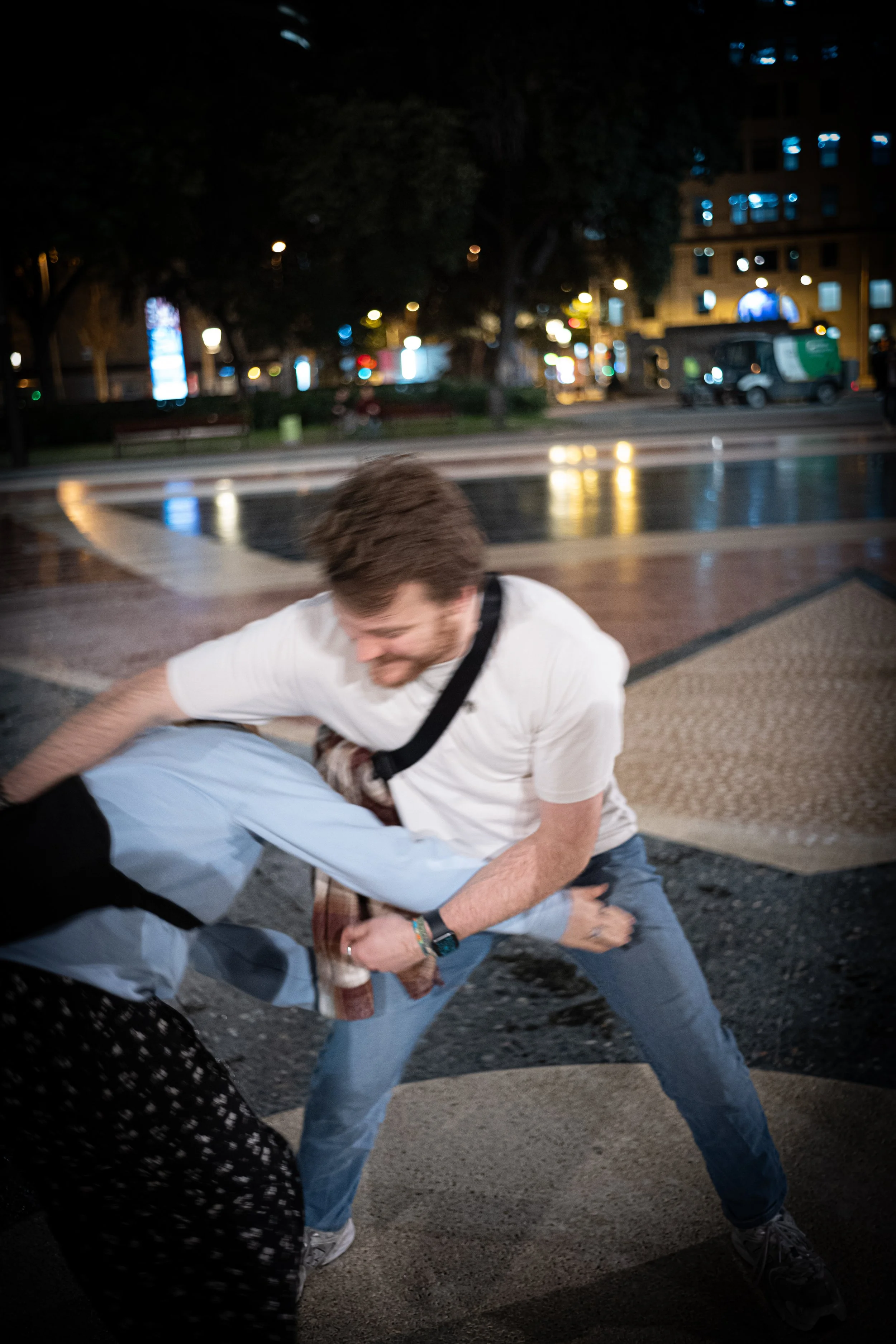
Holly and Nathan play fighting in Barcelona
Leica SL2-S. Leica Summicrom 35 V4 @ f2.